- Are you an Athletic Trainer, Physical Therapist, Physician, or other health professional caring for athletes or active individuals?
-
Do you have a patient with an injury that just doesn’t seem to get better?
-
Or, are you interested in improving your knowledge base and skills to aid in the care of your patients?
We’re Here To Help
Injury rehabilitation is about restoring function, whether its a simple ankle sprain, shoulder reconstruction, or patellar tendonitis. This can be done in a variety of ways with a variety of modalities based on a host of factors.
Every professional has their favorite techniques and equipment that work for them most of the time. But, what happens when the old standby doesn’t work? At MTS, we believe the more tools in the tool box, the better.
One of the keys to growing the size of your toolbox, is understanding how the body functions. Unfortunately, many of us go through school learning by memorization. It is oftentimes easier to learn a short list of modalities to “fix” an injury than it is to really understand why the athlete is hurt, and then creating ways to restore function. MTS can help you bridge the gap between memorization and true knowledge.
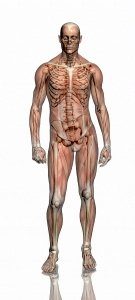 Functional Anatomy

The first step to understanding function, is to understand anatomy. The easiest and most effective way to learn how the body truly works together to create movement is to review your anatomy. Knowing the exact origin and insertion of every muscle in the body is the key to movement.
The best way to truly understand functional anatomy…head to the cadaver lab.
No lab? No Problem. MTS is here to help you understand how muscle contractions affect function.
Commonly Misread Injuries
It seems that both professionals and athletes come to MTS with many of the same struggles while treating their athletes. It seems that the same injuries tend to be misread, misdiagnosed, mistreated, or some combination of the three.
Many times, we as professionals try the old standby treatment, and if that doesn’t work, we treat the athlete symptomatically, just trying to reduce pain at the sight instead of finding the root of the problem. Unfortunately for the athlete, they soon get the feeling that they will never be pain free and either travel from therapist to therapist, hoping someone has an answer. Or, worse yet, they stop their activity because they have no hope.
Here is a list of the most common misunderstood and/or poorly treated conditions that many athletes suffer from. Click on the link to the injury for more information and treatment ideas for each condition.
 Sacroiliac Joint Injury or Lumbopelvic Dysfunction – This is a pretty broad topic, and affects as much as 90% of athletes (depending upon their sport and activity level). Lumbopelvic Dysfunction typically occurs with an anterior rotation on the right half of their pelvis, or an upslip of the left half, or both. This will typically lead to a functional leg length discrepancy on either leg. It doesn’t take long with one leg being longer than the other for an athlete to break down.

- Poor Ankle Dorsiflexion – Poor Ankle Dorsiflexion is another poorly understood injury. An athlete’s inability to dorsiflex will cause dramatic biomechanical issues for the entire lower extremity. It will cause problems at the foot, such as Plantar Fasciitis. The knee tends to be affected because they body will search to find the extra range of motion that it needs to perform activity. It usually finds the extra range of motion at the hip. So, as the joints above and below the knee are compromised, its only natural that the knee will break down. We also can’t forget that the glute’s ability to fire is directly related to an athlete’s ability to dorsiflex.
- Thoracic Spine Mobility – The shoulder is likely the most misunderstood and complex joint in the body. We have known for years that the Scapular stabilization muscles are immensely important for good shoulder health. What we are now finally understanding is the relationship between the Scapula and the Thoracic Spine that is sits so close to. Poor T-Spine mobility will affect an athlete’s shoulder health, ability to squat, and perform sport specific movements.

- Lateral Knee Pain – Often referred to as “IT Band Syndrome”, it can be debilitating for thousands of active people, especially if they’re runners. So, we massage, ultrasound, ice, and hope for the best (which is usually not very good), right? And, we can can’t forget that we try hard to stretch tissue that can’t be stretched (Fascia) in order to free our patients from pain. But, have you every looked at the proximal Tibio-Fibular joint? It is amazing how much this little known joint can affect the lower extremity.
- Neuro Tension – The neurological system is by far the most important system to train as it relates to athletes. For the patient that just can’t seem to get ride of that nagging pain that oftentimes accompanies injury. The tension on a nerve can increase after an injury as the cells around a nerve will shrink and essentially suffocate a nerve over time. When this happens, the nerve struggles to receive oxygen and nutrients and becomes irritated. By “flossing” the nerve, you can reduce tension and rid your athlete of that nagging pain.
- Flexibility – It is common knowledge that joint range of motion has an impact on an athlete’s health. What appears to not be so well known, is how to efficiently improve joint range of motion. We need to get past the thought process of holding stretches for long periods of time and learning to integrate concepts such as reciprocal inhibition and PNF patterns to increase flexibility.
- Tendonopathy – Another poorly understood concept as it relates to rehab. Tendonopathies can occur in a variety of areas (i.e. Patellar tendon, Peroneal tendon, etc.) but always occur because of some sort of strain and counterstrain. Finding the strain is the most important part. After that, we must address the issues that tendonopathies create within the tendon. After only a couple of weeks of pain in a tendon, calcification will set in and cause permanent pain, unless treated appropriately.
As always, MTS will try our best to educate and inform you through our website. But, keep in mind that many of these issues are complex. If you have questions or are interested in learning more about working with MTS on improving your sports medicine treatment program, please visit our Contact Us page and we’ll do everything possible to help.
Looking for more help? Schedule a consultation today!